
Contents
Overview
Vehicle inspection has a long history, dating back to the early 20th century when Henry Ford's assembly line production made cars more accessible to the masses. As the number of vehicles on the road increased, so did concerns about safety and emissions. In response, governments began implementing inspection programs to ensure vehicles met minimum safety and emissions standards.
📊 How It Works
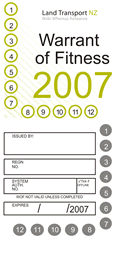
The vehicle inspection process typically involves a series of checks to verify compliance with safety and emissions standards. Inspectors examine vehicles for defects or damage, including tire pressure, brake pads, and exhaust system issues. Vehicles that pass inspection are issued a sticker or decal, which serves as proof of compliance and simplifies later controls.
📈 Key Facts & Numbers
Key facts and numbers highlight the importance of vehicle inspection requirements. According to some sources, vehicles that have undergone regular inspections are less likely to be involved in accidents. However, the effectiveness of inspection programs is reportedly a topic of debate.
👥 Key People & Organizations
Key people and organizations play a crucial role in shaping vehicle inspection requirements. Industry leaders, such as General Motors and Ford Motor Company, influence inspection requirements through their advocacy and research efforts.
🌎 Cultural Impact & Influence
Vehicle inspection requirements have a significant cultural impact and influence on society. By ensuring vehicles meet safety and emissions standards, inspection programs help reduce the number of accidents on the road and minimize environmental pollution.
⚡ Current State & Latest Developments
The current state of vehicle inspection requirements is marked by ongoing developments and updates. In response to advances in technology and changing environmental concerns, governments are revising inspection programs to address new safety and emissions challenges.
🤔 Controversies & Debates
Controversies and debates surrounding vehicle inspection requirements center on issues such as cost, effectiveness, and fairness. Some argue that inspection programs are too burdensome and expensive, particularly for low-income vehicle owners. Others contend that inspections are not frequent enough or do not adequately address emerging safety and emissions concerns.
🔮 Future Outlook & Predictions
Looking to the future, vehicle inspection requirements will continue to evolve in response to technological advancements and changing environmental concerns. As autonomous vehicles become more prevalent, inspection programs will need to adapt to ensure public safety and address new liability concerns.
💡 Practical Applications
Practical applications of vehicle inspection requirements are numerous and far-reaching. By ensuring vehicles meet safety and emissions standards, inspection programs help reduce the number of accidents on the road and minimize environmental pollution. Vehicle owners can also benefit from regular inspections, which can help identify potential issues before they become major problems.
Key Facts
- Category
- dmv-services
- Type
- topic